
Having left the venue of Saturday’s TEDxObserver conference, my wife and I climbed on a pair of Boris bikes and set off through the streets of Clerkenwell. “Where are we headed?” my wife asked me. “I have no idea, let’s take some side streets and see where we end up.”
It’s important to explore your curiosity and go on a journey without a destination in mind. That’s why we attended TEDx: to consume multiple voices, stories and ideas. Who knew what the next twenty minutes would bring, what action it might spark?
The 2012 TEDxObserver conference featured a neuroscientist, a community worker, food activist, musicians, a surgeon, a dancing psychologist and an anthropologist. My highlights included Pauline Pearce whose YouTube-captured rant amidst the 2011 riots became an inspiration. Having last seen the South African musician Hugh Masekela at an Anti Apartheid rally in Clapham Common in the ‘80s, it was great to hear him speak again. Then there was Miguel Torres, head of the Spanish winery who’d decided to take action on global warming after watching ‘An Inconvenient Truth’. A great example of the power of entrepreneurs in taking action to make real change. And finally Plan B, the musician and film director who spoke passionately about social injustice and the need to help urban kids discover their passion to get them re-engaged.
So what was the ‘ROI’ on all that? It’s enough that I broadened my horizons. It opened my eyes to themes outside my usual world. It moved me, it got me thinking, it satisfied my curiosity.
Curiosity is an underestimated business tool. In a world of uncertainty where we’re faced with more challenging problems than ever before, you ‘aint going to find the answer in the usual places. You’ll find inspiration in new places; you’ll need to learn from other industries and analogous businesses. You’ll need curiosity to challenge assumptions.
So on the face of it, Saturday was a great day. But somewhere deeper in our minds the value is being absorbed, mulled over, stored away to inspire us in the future in ways we can’t immediately know.
Whether it’s a bike ride with no destination, a conference with no identifiable return, listening to some new music or hanging out with a bunch of people you’d never usually mix with - try going somewhere you wouldn’t usually go; who knows in what ways it will inspire you.
Showing posts with label inspiration. Show all posts
Showing posts with label inspiration. Show all posts
Wednesday, 14 March 2012


Friday, 25 November 2011
It's Not The Size Of Your Idea, It's Doing Something With It That Counts
A couple of themes converged for me recently: one) the potential of a side project, what you can do in your spare time if you put your mind to it; two) the importance of making an idea happen fast, rather than leave it gathering dust on a shelf.
So first, the side project. When I talk to some people about opportunities they can explore outside of their day job, they tell me they have no time. No time? Yep, they’re too busy watching TV or whatever. There’s nothing wrong with that, but if you want to develop your talents in a new area or try stuff out, you might need to make some sacrifices. Doing it ‘on the side’ is a perfect way of prototyping ideas or even shaping your next career move as Shane Mac remind us in this great little video. So when my wife and I said let’s create a manifesto of thoughts in words and doodles, we gave up TV for a week and created it on the side.
The result is ‘Little Twenty’, a seven page ebook that you can check out by clicking on the image below. We could have sat on that idea for weeks or months but instead we decided to just roll our sleeves up and get on with it, creating it. The results aren’t perfect; our manifesto is hardly going to deliver a new book deal or change the world but it’s a nudge in the right direction. And we think it’s better doing *something* with an idea than nothing at all. I showed it to a publisher friend who made some smart suggestions about target audiences, niches and giving it more focus. And he’s right - it’s very much a work in progress, there are improvements to be made. But as I advocate in my new book ‘Zoom!’, it’s more important to make your ideas happen, fast, launch in beta, prototype. So, that’s what we’ve done with ‘Little Twenty’. We just put it up there, made it happen. It won’t change the world but it was fun to invest a few evenings creating something. And if it has two views or two thousand, the important part was that we did it. So it’s not how amazing your idea is, it’s doing something with it that counts.
So first, the side project. When I talk to some people about opportunities they can explore outside of their day job, they tell me they have no time. No time? Yep, they’re too busy watching TV or whatever. There’s nothing wrong with that, but if you want to develop your talents in a new area or try stuff out, you might need to make some sacrifices. Doing it ‘on the side’ is a perfect way of prototyping ideas or even shaping your next career move as Shane Mac remind us in this great little video. So when my wife and I said let’s create a manifesto of thoughts in words and doodles, we gave up TV for a week and created it on the side.
The result is ‘Little Twenty’, a seven page ebook that you can check out by clicking on the image below. We could have sat on that idea for weeks or months but instead we decided to just roll our sleeves up and get on with it, creating it. The results aren’t perfect; our manifesto is hardly going to deliver a new book deal or change the world but it’s a nudge in the right direction. And we think it’s better doing *something* with an idea than nothing at all. I showed it to a publisher friend who made some smart suggestions about target audiences, niches and giving it more focus. And he’s right - it’s very much a work in progress, there are improvements to be made. But as I advocate in my new book ‘Zoom!’, it’s more important to make your ideas happen, fast, launch in beta, prototype. So, that’s what we’ve done with ‘Little Twenty’. We just put it up there, made it happen. It won’t change the world but it was fun to invest a few evenings creating something. And if it has two views or two thousand, the important part was that we did it. So it’s not how amazing your idea is, it’s doing something with it that counts.
Monday, 21 March 2011
Where Inspiration Meets Action

Lots of people spend their Saturdays playing or watching sports. The bunch of guys sharing my early train to London last Saturday
You’ll be familiar with the TED Talks events, there is now ‘son of TED’ - or TEDx - independently organised TED events. Saturday saw The Observer host their first TEDx event, a day packed of over twenty speakers sharing ideas. It’s such a great concept; going to a one-day event bulging with twenty speakers means you’re more likely to get value than from a one-off keynote. So this is the bit like a festival approach to ideas, rather than a single headline act gig, you get a whole day of it. With twenty minutes for each speaker, there’s enough time to listen to their story.
TEDxObserver delivered a big caffeine hit of inspiration and stimulation. So many different people, different emotions and one speaker even got us dancing. A real mix of names: Vivienne Westwood, Goldie, Sarah Brown, Jude Law, Russell Davies, 7/7 survivor Martine Wright, Baaba Maal (performing above), Mariella Frostrup.
The overarching theme of the day – for me – was that that simple theme of taking action to create change. Of how Martine Wright turned a tragedy into a catalyst for becoming an Paralympics competitor, of how Goldie used music and art to change his life, of how South African landowner Mark Solms did something about the injustice he saw around him and created a shared-ownership winery. Okay ‘taking action’ might not be the most sophisticated strategy for change or success but it’s a damn good place to start.
Many of us get moved by reading a book, watching a play, seeing some TV coverage, reading an article and yes, even attending a conference. Fewer of us actually do something as a result of being moved. We miss the moment and fail to take action. Me? I’m going to aim to do something with my scribbled notes from Saturday. I’ll let you know how I get on.
You’ll be familiar with the TED Talks events, there is now ‘son of TED’ - or TEDx - independently organised TED events. Saturday saw The Observer host their first TEDx event, a day packed of over twenty speakers sharing ideas. It’s such a great concept; going to a one-day event bulging with twenty speakers means you’re more likely to get value than from a one-off keynote. So this is the bit like a festival approach to ideas, rather than a single headline act gig, you get a whole day of it. With twenty minutes for each speaker, there’s enough time to listen to their story.
TEDxObserver delivered a big caffeine hit of inspiration and stimulation. So many different people, different emotions and one speaker even got us dancing. A real mix of names: Vivienne Westwood, Goldie, Sarah Brown, Jude Law, Russell Davies, 7/7 survivor Martine Wright, Baaba Maal (performing above), Mariella Frostrup.
The overarching theme of the day – for me – was that that simple theme of taking action to create change. Of how Martine Wright turned a tragedy into a catalyst for becoming an Paralympics competitor, of how Goldie used music and art to change his life, of how South African landowner Mark Solms did something about the injustice he saw around him and created a shared-ownership winery. Okay ‘taking action’ might not be the most sophisticated strategy for change or success but it’s a damn good place to start.
Many of us get moved by reading a book, watching a play, seeing some TV coverage, reading an article and yes, even attending a conference. Fewer of us actually do something as a result of being moved. We miss the moment and fail to take action. Me? I’m going to aim to do something with my scribbled notes from Saturday. I’ll let you know how I get on.
Friday, 25 February 2011
So you’re a good storyteller. Are you a good story listener??

Since my book deadline conspired against me going on my annual Inspiration Trip to Texas, I’ve been keen to make sure I soak up the best of what London has to offer with talks and events throughout February and March. Last Friday I went to my first ‘The Story’ a one-day conference at The Conway Hall where a mix of artists, writers, digital producers and bloggers shared their storytelling experiences.
Storytelling is important to me as it unites all the projects I juggle. Whether I’m writing my new book or advising a client on how to communicate their offering, it’s all about stories. 2011’s 'The Story' had a good line-up, from the comedy writer Graham Linehan to the photographer Martin Parr. There were also a few surprises; I didn’t think I’d be that interested in Phil Gyford’s story, the guy behind Pepys’ Diary. But it was fascinating to hear how Phil has taken a story from the 17th Century and used digital tools to tell it now, from daily blog posts to Twitter. With 50% of his online community over the age of 60 it was great to hear an online success story that was not about young people.
But the stand-out for me was Karl James, a performer and director who runs The Dialogue Project, where he uses recorded conversation to explore people’s life stories. Karl played some audio clips of conversations reminding us about the importance of listening. He says we’re missing out by not listening properly, and I think he's right. In one audio clip where he’s asking the father of a child with leukemia about his feelings, there’s a gap of 19 seconds between Karl's question and the father's response. Karl didn’t try and fill that silence, he needed that silence to hear the right story. Through another example, he showed us that sometimes the story is not where you’re expect it to be, and that you need to listen to give it the freedom to get there.
Karl gave me such a simple but essential takeaway - how good are we at listening? In a crowded and noisy world full of multiple stories on multiple platforms are we pausing to listen? So I’m embarking on my own listening strategy, with my family, my friends, clients and people I’m interviewing for my book. I’m going to be listening more.
Storytelling is important to me as it unites all the projects I juggle. Whether I’m writing my new book or advising a client on how to communicate their offering, it’s all about stories. 2011’s 'The Story' had a good line-up, from the comedy writer Graham Linehan to the photographer Martin Parr. There were also a few surprises; I didn’t think I’d be that interested in Phil Gyford’s story, the guy behind Pepys’ Diary. But it was fascinating to hear how Phil has taken a story from the 17th Century and used digital tools to tell it now, from daily blog posts to Twitter. With 50% of his online community over the age of 60 it was great to hear an online success story that was not about young people.
But the stand-out for me was Karl James, a performer and director who runs The Dialogue Project, where he uses recorded conversation to explore people’s life stories. Karl played some audio clips of conversations reminding us about the importance of listening. He says we’re missing out by not listening properly, and I think he's right. In one audio clip where he’s asking the father of a child with leukemia about his feelings, there’s a gap of 19 seconds between Karl's question and the father's response. Karl didn’t try and fill that silence, he needed that silence to hear the right story. Through another example, he showed us that sometimes the story is not where you’re expect it to be, and that you need to listen to give it the freedom to get there.
Karl gave me such a simple but essential takeaway - how good are we at listening? In a crowded and noisy world full of multiple stories on multiple platforms are we pausing to listen? So I’m embarking on my own listening strategy, with my family, my friends, clients and people I’m interviewing for my book. I’m going to be listening more.
Thursday, 3 February 2011
The Business Hustle: Lessons In Business From Jay-Z


I’ve just been reading ‘Decoded’ by Jay-Z. Decoded is on the face of it, a book that deconstructs his lyrics, but like the rap itself, there’s more to it that first meets the eye. The book is also part autobiographical and I left with some lessons that are valuable for anyone looking to make their business idea happen. So here are four business lessons from Jay-Z:
1) Being A Good Hustler Is Better Than An MBA. Whether he was dealing drugs in his teenage years or running Roc-a-fella Records and his business interests, Jay-Z embraces the spirit of the hustler. Those skills that he learnt on the street corner dealing - okay they may not be politically correct - but they still remain the essence of any enterprise: you buy something for one price, sell it on for a higher price and make a profit. For him, the hustler trying to find his fortune is the ultimate human story, “it’s the ultimate metaphor for basic human struggles: to survive and resist, to win and make sense of it all”. That mindset, that spirit, and that emotional investment is essential if you’re going to be a success. Speaking about the launch of Roc-a-fella, he says, "we didn't know business yet, but we knew how to hustle".
2) There’s No Magic Without Hard Work. Like many before him, Jay-Z reminds us that success needs hard-graft. "Without the work, the magic won't come”, he says, and commenting on Michael Jordan, "that's the kind of consistency that you only get by adding dead serious discipline to whatever talent you have". Of course there are no overnight success stories in business; sure, you might get lucky, but you still need to invest ‘sweat equity’.
3) Have A Goal, Write It Down And Hit It. When he set up his businesses, Jay-Z set goals, "We made short and long term projections, we kept it realistic, but the key thing is that we wrote it down, which is as important as visualisation in realizing success". Once you commit that goal to paper, it helps focus your mind on meeting it. If it stays loose you can’t hit it.
4) Be Resourceful. Jay-Z talks about getting resourceful to deal with droughts: "a drought in the game is when the supply or demand starts to drop - and that's when resourceful hustlers have to get creative". Back to the dealing on the street corner, he talks about the metaphor of turning a 'mound' of work into a mountain of money. We all face droughts, when customers dry up or a deal falls flat. That sense of being resourceful is at the heart of the one-person business (I wrote about it in my first book Leap! Ditch Your Job, Start Your Own Business And Set Yourself Free: "All I have is my bare hands, a load of contacts and a bunch of ideas. And with that, I've got to make a whole load of money. It's that simple and it's that scary".
What else did Decoded remind me? That like a lot of art, rap can be read on more than one level; it’s truly multi-layered. So don't dismiss it - 'the art of rap is deceptive' - if you look under the bonnet you may be surprised).
1) Being A Good Hustler Is Better Than An MBA. Whether he was dealing drugs in his teenage years or running Roc-a-fella Records and his business interests, Jay-Z embraces the spirit of the hustler. Those skills that he learnt on the street corner dealing - okay they may not be politically correct - but they still remain the essence of any enterprise: you buy something for one price, sell it on for a higher price and make a profit. For him, the hustler trying to find his fortune is the ultimate human story, “it’s the ultimate metaphor for basic human struggles: to survive and resist, to win and make sense of it all”. That mindset, that spirit, and that emotional investment is essential if you’re going to be a success. Speaking about the launch of Roc-a-fella, he says, "we didn't know business yet, but we knew how to hustle".
2) There’s No Magic Without Hard Work. Like many before him, Jay-Z reminds us that success needs hard-graft. "Without the work, the magic won't come”, he says, and commenting on Michael Jordan, "that's the kind of consistency that you only get by adding dead serious discipline to whatever talent you have". Of course there are no overnight success stories in business; sure, you might get lucky, but you still need to invest ‘sweat equity’.
3) Have A Goal, Write It Down And Hit It. When he set up his businesses, Jay-Z set goals, "We made short and long term projections, we kept it realistic, but the key thing is that we wrote it down, which is as important as visualisation in realizing success". Once you commit that goal to paper, it helps focus your mind on meeting it. If it stays loose you can’t hit it.
4) Be Resourceful. Jay-Z talks about getting resourceful to deal with droughts: "a drought in the game is when the supply or demand starts to drop - and that's when resourceful hustlers have to get creative". Back to the dealing on the street corner, he talks about the metaphor of turning a 'mound' of work into a mountain of money. We all face droughts, when customers dry up or a deal falls flat. That sense of being resourceful is at the heart of the one-person business (I wrote about it in my first book Leap! Ditch Your Job, Start Your Own Business And Set Yourself Free: "All I have is my bare hands, a load of contacts and a bunch of ideas. And with that, I've got to make a whole load of money. It's that simple and it's that scary".
What else did Decoded remind me? That like a lot of art, rap can be read on more than one level; it’s truly multi-layered. So don't dismiss it - 'the art of rap is deceptive' - if you look under the bonnet you may be surprised).
Monday, 24 January 2011
What do you do in a nutshell? Getting famous for ONE thing.
In a cluttered and noisy marketplace, it can be tough to get heard. We know that distinctive and single-focused brands tend to stand out from the crowd. But for companies and people who provide more than one talent or product, it can be difficult providing that focus.
My advice to those jugglers – whether businesses or individuals – is that they need to identify a common thread that unites their plurality: an attitude, an industry specialism, a philosophy, a unique approach, whatever. Make that thread the single minded proposition to shout about. When clients and prospects get to know you they can learn about the rest of your talents; but first you need to get famous for one thing.
I help my clients distil everything down to that focused, simple and get-able proposition. As I juggle a multi-dimensional work life, it’s something I struggle with myself. How to communicate that breadth – from marketing expertise to book writing – simply? My answer is that I am all about ideas (I'm the 'Ideas Guy'), and I produced this little video below that – hopefully – communicates this clearly. It’s not always an easy one to pull off, let me know what you think. Leave a comment or get me on Twitter @iansanders.
Friday, 31 December 2010
Ten London Coffee Shops To Get Your Ideas Flowing
So I decided to skip the ‘10 Things that will change your life in 2011’ or my ‘10 Social Media Trends That Will Make You Instantly Attractive’ posts for something different at the end of 2010: my passion for coffee.
Coffee has become such an important part of my work life - it's a daily ritual. Having a somewhat nomadic work life and a bunch of demanding projects I rely upon a change of scenery to come up with ideas or solve business challenges. So the daily espresso and where I consume it has become just as important in my work life as the co-worker or office space might be to you. My Twitter followers will know I’m often tweeting about my latest coffee and one of them - @Stefidi - asked me to blog about my top
#1Market Coffee House, E1: What I like about this place is that it’s 'old school'. Avoid peak times and you can find a quiet spot to sit and read the paper (at busy times, you'll be asked to put your laptop away). They usually have Radio Four on, and even if you can’t hear it properly above the din of the coffeeshop, it sets a nice vibe, an old-fashioned contrast to the suits and the glossy office blocks of the City across the street.
 #2 Nude Espresso, E1: I discovered Nude Espresso when an ex-client who was working at Habitat took me there a few years ago. It tends to be frequented by creatives and local agency types but has a nice vibe. It’s a good meeting and thinking place. I like their tiered tipping system.
#3 The Luxe, E1: The Luxe often becomes my East London workspace. The coffee is good, the staff friendly and I feel I could stay all day. If you’re looking for a quiet space to get your head down then this place is not for you; but if you’re after a stimulating environment, some people watching and a comfy sofa then this is your place. On most mornings you can work to an 80s, 90s soundtrack (they like their music loud here) and you can often spot locals like Gilbert and George here.

#4 Monmouth Coffee Company, WC2: If I had to rank these venues in order of quality and service, Monmouth would win (hey, I even wrote a post about it for BNET.com). The coffee, the price, the service is all good. This tends to be a pit-stop for me rather than somewhere I hang out and I drink espresso as it was intended - quickly. You can sit on the bench outside and people watch. The coffee here even attracts visitors staying at The Covent Garden Hotel across the street; I once spotted Jack Black in the queue behind me. When I take guests or friends here for the first time what they like most is the simple but effective ordering system. Once you request your coffee, the cashier shouts up to the barista on the mezzanine behind you, ‘single espresso'. the barista shouts back ‘single espresso’ to confirm they heard. How’s that for a damn simple system?

#5 Monmouth Coffee Company, SE1: Here at their Borough Market shop I tend to linger longer, they have a communal table, a small bar to sit up at and a tiny mezzanine which is great for people watching. I spent a great Saturday here once editing my second book. This is the view from that spot onto the market.
#6 Flat White, W1: In the bustle of

#8 Bar Italia, W1: This list would feel incomplete without Bar Italia. To be honest, I don’t rate the coffee much but it remains a

#9 Rough Trade East, E1: If you like your vinyl or browsing CDs it doesn’t get much better than Rough Trade’s shop at the Truman Brewery. And there’s a little coffee shop by the entrance for people watching, writing in the moleskine after being inspired by all that music.

#10 Albion Cafe at The Boundary Hotel, E2. This tends to be a morning spring or summer hang out for me, sitting outside and having a few coffees or a late brunch. Down a blink-and-you’ll-miss-it alleyway from Shoreditch High St
Notes: i) I haven’t included any chain coffee shops because I try and avoid them; ii) I haven’t included member’s clubs as that’s elitist; iii) all photos by Ian Sanders.
Notes: i) I haven’t included any chain coffee shops because I try and avoid them; ii) I haven’t included member’s clubs as that’s elitist; iii) all photos by Ian Sanders.
Wednesday, 22 December 2010
My Year of Exploration

So how did you score on meeting new people in 2010?
Lots of people and organisations don’t seem to extend their networks. They hang out, work and collaborate with the *same* people, year in, year out. The long-term staffers, clients and suppliers don’t change. It’s all very predictable and safe. Yawn!
Being self-employed I’ve always been stimulated by my ability to renew and refresh who I work with, who I hang out with. I can change that whenever I fancy.
Hey, but nothing wrong with the long-term contacts. I have friendships and business relationships that have endured over fifteen years and that I value highly. But the relationships that promise to shake-up my business and fuel inspiration are those new people I meet. People in unrelated fields, doing totally different things challenge and inspire me in equal measures.
Those connections are often more about personal development than business development. I’m not selling them anything, but inevitably they evolve to a relationship of reciprocity where we help each other, work with each other. Or maybe not, we just have a damn good lunch.
So back in January I set a goal of meeting at least one new person a week this year. Looking back , I did at least that: not quick handshakes at a conference, I mean quality exchanges over a coffee. Some of those connections have come from existing contacts who are good at ‘I don’t know if there’s anything in it, but you must meet Sam’ type of introductions. Others are more random or have come via Twitter. This year Twitter has brought me a new client, a book deal, some great stories for my blog and just some good espresso time.
Has it been good for my business? Yep. Has it been good for my soul? You bet.
“What was your ROI on all those connections” a friend asked me. “I don’t know” is my honest answer. But what I do know is that renewal feeds my ideas and I intend to keep up the pace of making the effort to meet a bunch of totally new people in 2011.
Because who knows where it will take you? So get out there and go explore…
* above is me and a bunch of new people at SXSW 2010. Picture credit: Marc Salsberry
Tuesday, 14 December 2010
How To Co-Write A Business Book Part 1
So, David Sloly and I are working on our Secret Book Project, that will be published next October. We’ve both written books before but – apart from a short ebook we created earlier this year – this is the first time we’ve co-written something. With the bar set high (by us, the marketplace and our publisher) the pressure is on. With our busy work lives and us living in different parts of the UK, we knew we needed to invest in some time together to start the writing process (Skype, email and telephone calls was not going to cut it).We agreed on a trip away, as a journey is essential to productive ideas generation. So last week we took the Eurostar to Paris
Back at the apartment I chatted with David about how the experience was going. So here’s part one of How To Co-Write A Business Book:
Wednesday, 24 November 2010
Why You Need A Journey If You Want To Come Up With Good Ideas
As an ideas junkie, I’m passionate about exploring what makes good ideas. For me, journeys are always productive in generating ideas: a train ride, a cycle or a flight always prompts some valuable scribbles in the obligatory moleskine. It’s why I’ve taken mini ‘inspiration jaunts’ (see my book ‘Juggle! Rethink Work...’ for more on this) throughout my career and why I’m taking a train to Paris
Last week I met up with Martijn Sjoorda for what is becoming our bi-annual lunch. Martijn is Research Director at Fresh Orange in the Netherlands Europe to help unlock innovation and explore leadership potential. After lunch we had a stroll and I asked Martijn to explain the science behind taking journeys; why changing our environment is so productive.
Thursday, 21 October 2010
A Lesson In Embracing Change
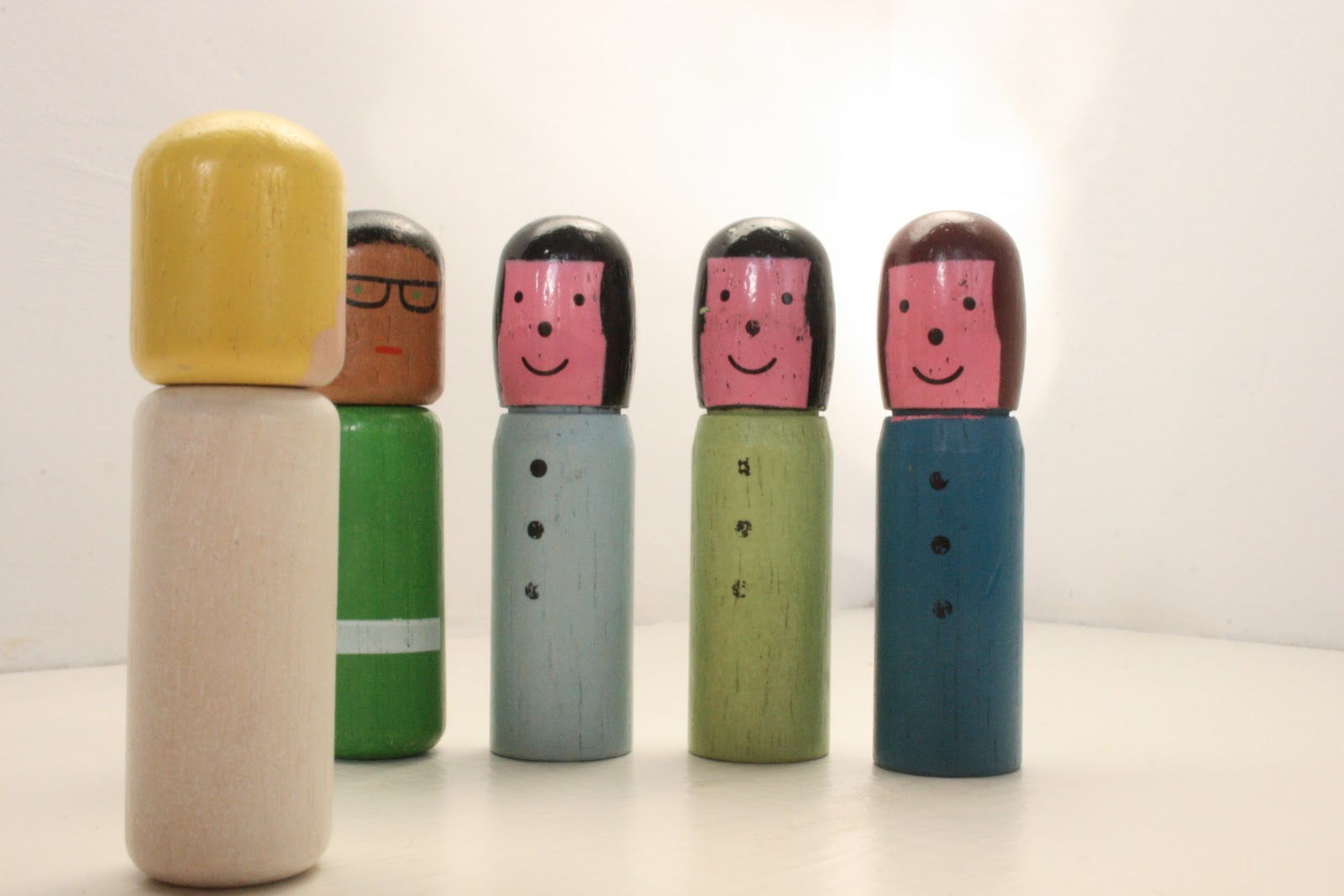
We often hear people don’t have a natural ability to deal with change, and that’s cited as an obstacle to implementing organisational change.
But I know someone who’s recently embraced radical organisational change with no fear or complaint.
He went from being a part-time member of a 15-person team to being in a team of 30 within an organisation of several hundred.
His hours have been extended significantly; he now has to leave the house much earlier and gets home much later.
He’s mixing with a totally new bunch of people, and has a lot of names to remember.
He’s now using technology every day, whereas before he didn’t have that much experience.
He has a new culture to embrace with its rules, quirks and requirements.
Apart from the fact that he’s knackered every day, he’s never complained once about this big change in his life. In fact, he loves it!
Have you guessed who it is?
It’s my five year old son. He’s embraced the shift to full time education with no fear or grumbles.
If only executives and workers could get in touch with their five year old selves, change might be a hell of a lot easier.
But I know someone who’s recently embraced radical organisational change with no fear or complaint.
He went from being a part-time member of a 15-person team to being in a team of 30 within an organisation of several hundred.
His hours have been extended significantly; he now has to leave the house much earlier and gets home much later.
He’s mixing with a totally new bunch of people, and has a lot of names to remember.
He’s now using technology every day, whereas before he didn’t have that much experience.
He has a new culture to embrace with its rules, quirks and requirements.
Apart from the fact that he’s knackered every day, he’s never complained once about this big change in his life. In fact, he loves it!
Have you guessed who it is?
It’s my five year old son. He’s embraced the shift to full time education with no fear or grumbles.
If only executives and workers could get in touch with their five year old selves, change might be a hell of a lot easier.
Wednesday, 13 October 2010
Soaking Up A Do Lecture To Get Things Done

Our in-boxes and twitter stream get bombarded with links to the latest must-watch video with promises to inspire or change your life. Inevitably - as The New York Times reported this week - we abandon said video after 60 seconds because we don't have the time or it's just not interesting enough. So it's hard to know what merits watching. Like everything else, I guess you just have to trust your instinct.
Last week, a meeting cancellation liberated my day. So when I saw that the Do Lectures had launched videos from their 2010 series of talks, I decided to pick one and invest the time - with no distractions - to watch. So I put the player on full screen, sat back, and with my Moleskine at my side soaked up my own experience of a Do Lecture.
Last week, a meeting cancellation liberated my day. So when I saw that the Do Lectures had launched videos from their 2010 series of talks, I decided to pick one and invest the time - with no distractions - to watch. So I put the player on full screen, sat back, and with my Moleskine at my side soaked up my own experience of a Do Lecture.
And boy, was it a good investment; ironically all about managing time to get things done. I'd heard a lot about David Allen's book 'Getting Things Done' but hadn't got around to reading it; so it was great to hear David's story. This isn’t a philosophy about outsourcing your life or techniques in speed-reading. There's no gimmicks in sight. It's more powerful than that. It's about having the self awareness to have a strong sense of purpose, and be incredibly focused on what you do and why you do it. Since David and the DoLectures guys were good enough to share this with the world, let me share my personal takeaways:
- GTD is not just about creating any space or time in your schedule; you need to create 'psychic space' where you're in the right mindset.
- the importance of CONTROL: capture stuff that is not on cruise control , clarify what you need to do with it and write it down. David says 'your mind is for having ideas not holding them'.
- the importance of PERSPECTIVE: know why you're here, know what your vision and goals look like and what you need to do to get there. 'If you know where you're going and what you're doing, efficiency and style are your only improvement opportunities'.
- 'nail now' - get under control where you are now. Decide desired outcomes and actions required to get there.
'GTD is not about getting things done. It's about creating the space to follow the voice that's always been there'.
So watch the video below (or follow this link) and start getting things done. It's worth it.
Monday, 6 September 2010
Has your marketing passed its ‘best by’ date?

So the world has changed over the last 12 months and so has your business right? Your products and services have changed, along with your team and your clients. And if you’re a one person business, your role and offering has inevitably evolved too. So if that’s the case why hasn’t your marketing kept pace? Why haven’t you updated your website or ads to reflect the changes? Why haven’t you changed your presentation, your ‘this is what I do’ script? Why haven’t you changed your LinkedIn profile, your Twitter bio?
We’re often guilty of not paying attention to our own marketing communications - when our business changes it’s rarely a priority to reflect those changes across our own marketing touch points. But it should be.
I see a lot of businesses where there is a disconnect between what they do and what they say they do; between who they are and what they say they are. The market position is often a long way away from their real offering. Of course, it’s not always easy standing back from the business or organisation to answer the question ‘what do we stand for’? It can be quite a process to bridge that disconnect. That’s what my own business does: we go into organisations and help come up with the answer. Often it involves conversations with a range of stake holders from staff to clients, asking everyone from the front desk up, what does this business stand for? Once you’ve worked that out and can encapsulate that DNA in a market offering, then you can refresh your marketing in a new a strategy.
If hiring experts like The Ian Sanders Company is out of your reach, try initiatives of your own. If you’re a small business owner, ask your team and clients what they think the brand stands for. Be prepared to listen. And if you’re a one person business, take a morning or an afternoon away from your desk and laptop. Pause, stand back from the day-to-day, and think how you’ve changed. And then look at your touch points and tweak your web copy, your profile and messaging.
Because if you continue selling the old message, you really are missing a trick.
Thursday, 19 August 2010
What the heck is SXSW anyway?
Those four letters: SXSW.
“What the heck is es-ex-es-double-u?”
“What the heck is es-ex-es-double-u?”
“That’s a music festival, right?”
“I thought it was a film festival”
“Oh, that event for geeks?”
SXSW - South By South West - gets a lot of different reactions. Some consider it the ultimate geekfest and then there’s the inevitable yawns from people who are sick of seeing #sxsw on Twitter streams, especially for the week in March when people flock to the Austin Convention Center in Texas. SXSW offers an Interactive, Film and Music festival but it’s the interactive element that’s been attracting me for the last two years.
For me SXSW is an Ideas Festival. I’m not a geek, I’m an ‘ideas guy’ and that week in Texas is a mash-up between a tweet-up, TED talks and great parties rolled into one. It stimulates and inspires me. Going there isn't a complete no-brainer; a week in the US is quite a time investment and that’s before you factor in the flight from London and the hotel nights. Plus, the dates always fall on my wedding anniversary.
I’ve made some great connections at SXSW, meeting people I’ve connected with on Twitter and also making a stack of brand new connections. People like Espree Devora who I nearly met in 2009 (long story), and caught up with in 2010 (watch my video interview with her here). So when Espree said she’d pull together a panel idea for 2011 I said I’d love to be part of it. The rest of the panel line-up is Shane Mac, Giang Biscan (two guys I haven’t met yet) plus Lewis Howes (who I have). Our idea - which is now on the panel picker for the public vote - will see us share our experiences in business about doing it our own way. Our panel title is 'DITCH THE BOOK - Running A Business YOUR Way' and you can check it out (and vote for it) here.
At SXSW this year I met Ingrid Vanderveldt for a video interview (I’d connected with her producer Lyn Graft about two years ago - it took us a while to hook up :) ). in the video ‘SXSW Interactive On The Road’ she asks me what the event means to me. Check it out below:
“I thought it was a film festival”
“Oh, that event for geeks?”
SXSW - South By South West - gets a lot of different reactions. Some consider it the ultimate geekfest and then there’s the inevitable yawns from people who are sick of seeing #sxsw on Twitter streams, especially for the week in March when people flock to the Austin Convention Center in Texas. SXSW offers an Interactive, Film and Music festival but it’s the interactive element that’s been attracting me for the last two years.
For me SXSW is an Ideas Festival. I’m not a geek, I’m an ‘ideas guy’ and that week in Texas is a mash-up between a tweet-up, TED talks and great parties rolled into one. It stimulates and inspires me. Going there isn't a complete no-brainer; a week in the US is quite a time investment and that’s before you factor in the flight from London and the hotel nights. Plus, the dates always fall on my wedding anniversary.
I’ve made some great connections at SXSW, meeting people I’ve connected with on Twitter and also making a stack of brand new connections. People like Espree Devora who I nearly met in 2009 (long story), and caught up with in 2010 (watch my video interview with her here). So when Espree said she’d pull together a panel idea for 2011 I said I’d love to be part of it. The rest of the panel line-up is Shane Mac, Giang Biscan (two guys I haven’t met yet) plus Lewis Howes (who I have). Our idea - which is now on the panel picker for the public vote - will see us share our experiences in business about doing it our own way. Our panel title is 'DITCH THE BOOK - Running A Business YOUR Way' and you can check it out (and vote for it) here.
At SXSW this year I met Ingrid Vanderveldt for a video interview (I’d connected with her producer Lyn Graft about two years ago - it took us a while to hook up :) ). in the video ‘SXSW Interactive On The Road’ she asks me what the event means to me. Check it out below:
Friday, 6 August 2010
Lewis Howes: Making It Up As I Go Along
Lewis Howes used to play American football for a living. When a sports injury put him out of the game for six months he had to find ways to make a living. He had zero business experience but knew what he wanted to achieve. So without any great plan he set about building some businesses and writing a book. His first book was all about LinkedIn, a platform that Lewis is passionate about after having spent many hours each day learning how to exploit as a business tool. He now travels extensively giving talks alongside running popular webinars.
What I like about his story is how Lewis reinvented himself and created successful businesses with no great plan. He's made it up as he gone along. I hung out with Lewis and here’s a two minute video of our chat.
Thursday, 29 July 2010
Dave Stewart: putting ideas into action
Here’s part two of my interview with Dave Stewart (you can catch part 1 here). Dave has just co-authored a book ‘The Business Playground: where creativity and commerce collide’. He is president of his very own ideas factory Weapons Of Mass Entertainment that develops ideas for music, TV, film, products and brands. Dave also consults for Nokia as their official Change Agent but is still very active as a musician and producer. This month saw him in Nashville recording a solo album and also working on a new album for Stevie Nicks.
In ‘Putting Ideas Into Action’ Dave talks about implementing ideas, ideas spaghetti, relinquishing control, how to get ideas noticed and the lessons he’s learnt from his experience in Eurythmics. He also talks about what drives his ideas and who inspires him.
A key takeaway is the importance of partnering to make your idea happen. That means relinquishing some control but as Dave says: “I’d rather have 10% of something that took off than 100% of something that was still on the table”.
Thanks to Dave for his time and for Kori Bundi at Weapons Of Mass Entertainment in LA for doing the colour correction.
In ‘Putting Ideas Into Action’ Dave talks about implementing ideas, ideas spaghetti, relinquishing control, how to get ideas noticed and the lessons he’s learnt from his experience in Eurythmics. He also talks about what drives his ideas and who inspires him.
A key takeaway is the importance of partnering to make your idea happen. That means relinquishing some control but as Dave says: “I’d rather have 10% of something that took off than 100% of something that was still on the table”.
Thanks to Dave for his time and for Kori Bundi at Weapons Of Mass Entertainment in LA for doing the colour correction.
Subscribe to:
Posts (Atom)


